Side Effects of Testosterone Therapy in Women

Testosterone is usually thought of as a male hormone, but women produce it too, in much smaller amounts. In the US, clinicians increasingly prescribe it to women around menopause, most often for low sexual desire, and one of the first things women ask is what it might do to their skin, hair or voice.
The clearest answers come from two publications from 2019: a meta-analysis of 36 randomized trials involving almost 8,500 women, and a global consensus statement from the major endocrine and menopause societies that drew on it. Together they shape how careful clinicians approach testosterone for women today.
Where testosterone therapy for women stands
Testosterone has been prescribed to women for years. In the US this is done off-label, using carefully reduced doses of products made for men or formulations prepared by a pharmacy. That may change. Australia, New Zealand, the United Kingdom and South Africa already have products designed specifically for women, and in September 2026 the FDA held a public workshop on a possible approval pathway in the US.
The strongest evidence is for postmenopausal women with low sexual desire that causes them distress, a condition known as hypoactive sexual desire disorder. Most of the trials were done in this group, and it is where the 2019 consensus statement found a clear benefit. Women also ask about energy, mood, focus and muscle.
Research in those areas is still limited and has not yet shown a consistent benefit, and there is less data for women before menopause, so a clinician will look at those symptoms more broadly, including other possible causes.
What the trials found
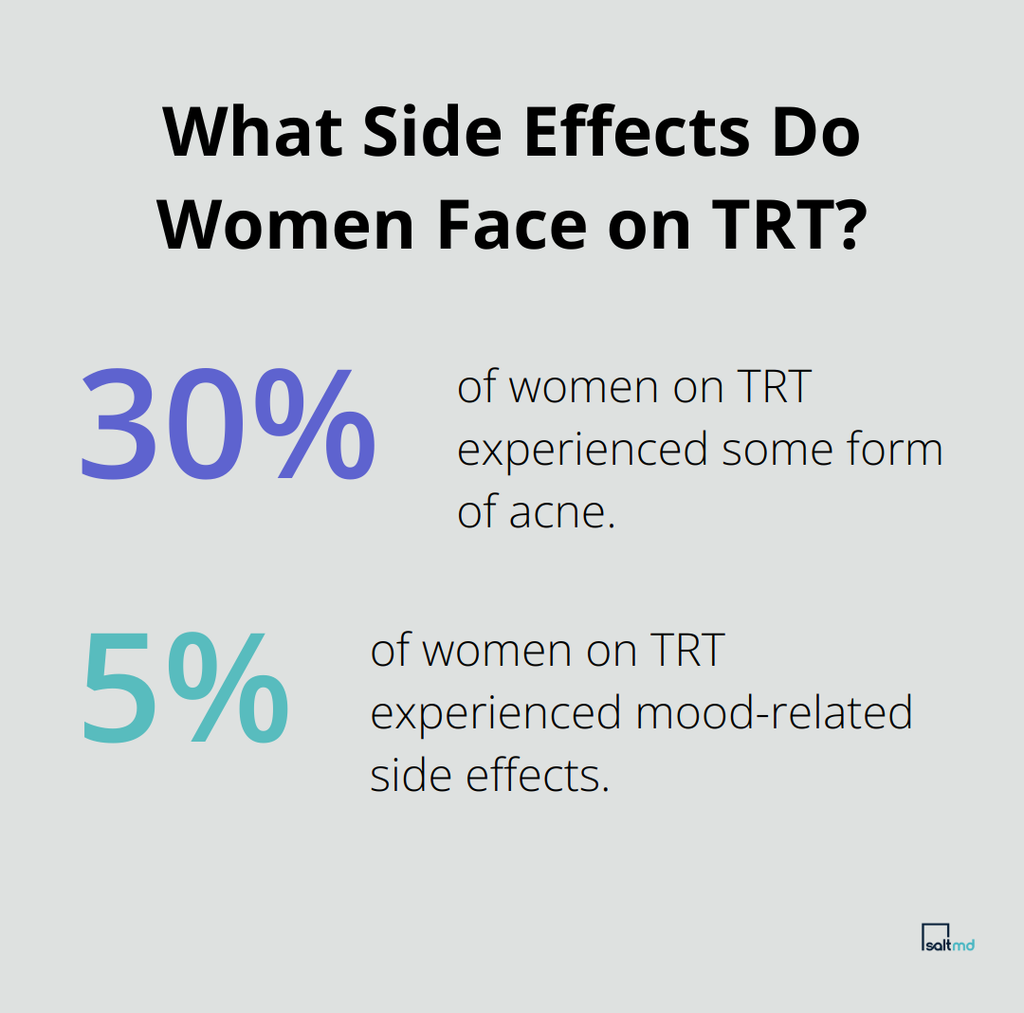
The meta-analysis pooled trials that used doses intended to bring testosterone to the levels of a premenopausal woman. Women on testosterone were more likely than women on placebo to report acne and extra hair growth. In the trials that measured them, there was no increase in hair loss, voice changes, enlargement of the clitoris or serious adverse events.
The route of treatment mattered for cholesterol. Testosterone taken by mouth raised LDL cholesterol, while patches and creams had no effect on blood lipids, which is why the authors recommended non-oral forms. Women on testosterone also gained a little weight on average.
These trials lasted up to two years and did not include women at high risk of heart disease or diabetes, so long-term safety is still being studied.
Why the dose matters
The side effects seen in trials came from doses aimed at normal female levels. The consensus statement advises against doses that push testosterone above that range and recommends watching for signs of androgen excess throughout treatment. Using a fraction of a product designed for men makes consistent dosing harder, which is part of the reason clinicians have asked the FDA for a product made for women.
The same statement does not recommend compounded “bioidentical” testosterone for low desire, citing a lack of evidence on its safety and effectiveness.
How treatment is monitored
Testosterone levels do not reliably track sexual function in women, so a blood test alone cannot show whether treatment is needed. Testing is used instead to keep treatment within a safe range. The consensus statement recommends measuring total testosterone before starting and again three to six weeks later, then every six months for women who continue.
If there is no benefit after six months, it recommends stopping, so that no one stays on a treatment that is not helping.
Talking it through at SaltMD
If low desire or other changes around menopause are affecting you, a 30-minute consultation and a hormone panel are a sensible place to start, in person in Atlanta or by video. Your blood can be drawn at a lab near you or at our office, or your clinician can review results from the past 90 days. Your clinician will go through what the evidence supports for your situation, including options other than testosterone.
Learn more about lab panel testing at SaltMD.
Sources
- Davis SR et al. Global consensus position statement on the use of testosterone therapy for women. J Clin Endocrinol Metab. 2019;104(10):4660-4666. doi:10.1210/jc.2019-01603
- Islam RM, Bell RJ, Green S, Page MJ, Davis SR. Safety and efficacy of testosterone for women: a systematic review and meta-analysis of randomised controlled trial data. Lancet Diabetes Endocrinol. 2019;7(10):754-766. doi:10.1016/S2213-8587(19)30189-5
- Mahatole S, Ananthan P. US regulators urge more research on testosterone therapy for women. Reuters, September 17, 2026.