Can You Take TRT and Ozempic Together?
Low testosterone and excess weight often show up in the same person. Many men who are struggling with their weight also have symptoms like low energy and low libido, and blood tests that show low testosterone. With GLP-1 medications such as Ozempic now widely known, a common question is whether it makes sense to treat both at the same time.
The answer depends less on the two medications and more on why testosterone is low in the first place. Below we explain what Ozempic is, how weight and testosterone affect each other, what the research says about using these treatments together, and what needs monitoring if you do.
What Ozempic is
Ozempic is a brand name for semaglutide, a GLP-1 medication. It is FDA-approved for type 2 diabetes. The same drug at a higher dose is sold as Wegovy and is FDA-approved for weight management. Tirzepatide, sold as Mounjaro and Zepbound, works in a similar way.
When people ask about “TRT and Ozempic”, they usually mean GLP-1 medications in general, and that is how we use the term in this article. If you are prescribed a GLP-1 at SaltMD, your clinician will explain exactly which medication and which form you are receiving.
Can they be taken together?
There is no known direct interaction between testosterone and GLP-1 medications, and the two do different jobs. Testosterone treats confirmed low testosterone. A GLP-1 reduces appetite and helps with weight and blood sugar.
Whether both are right for you is a separate question. In some men, treating weight first is enough to bring testosterone back up, and adding TRT would be unnecessary.
Weight and testosterone affect each other
Excess body fat lowers testosterone. It also works the other way: in a meta-analysis of weight loss studies in men, losing weight through diet or surgery raised testosterone levels, and the more weight men lost, the bigger the rise.
GLP-1 medications appear to do the same through weight loss. In a 16-week study of men with obesity and low testosterone, those given the GLP-1 medication liraglutide saw their testosterone rise, along with LH and FSH, the hormones that tell the testes to make testosterone. Overall, they did better than a comparison group given testosterone therapy.
That matters for one practical reason. Testosterone therapy suppresses the body’s own production and lowers sperm counts. Losing weight can raise testosterone without that effect, which is important for men who still want children.
When combining them may make sense
For men whose testosterone stays low after weight loss, or who have low testosterone for reasons unrelated to weight, treating both can be reasonable.
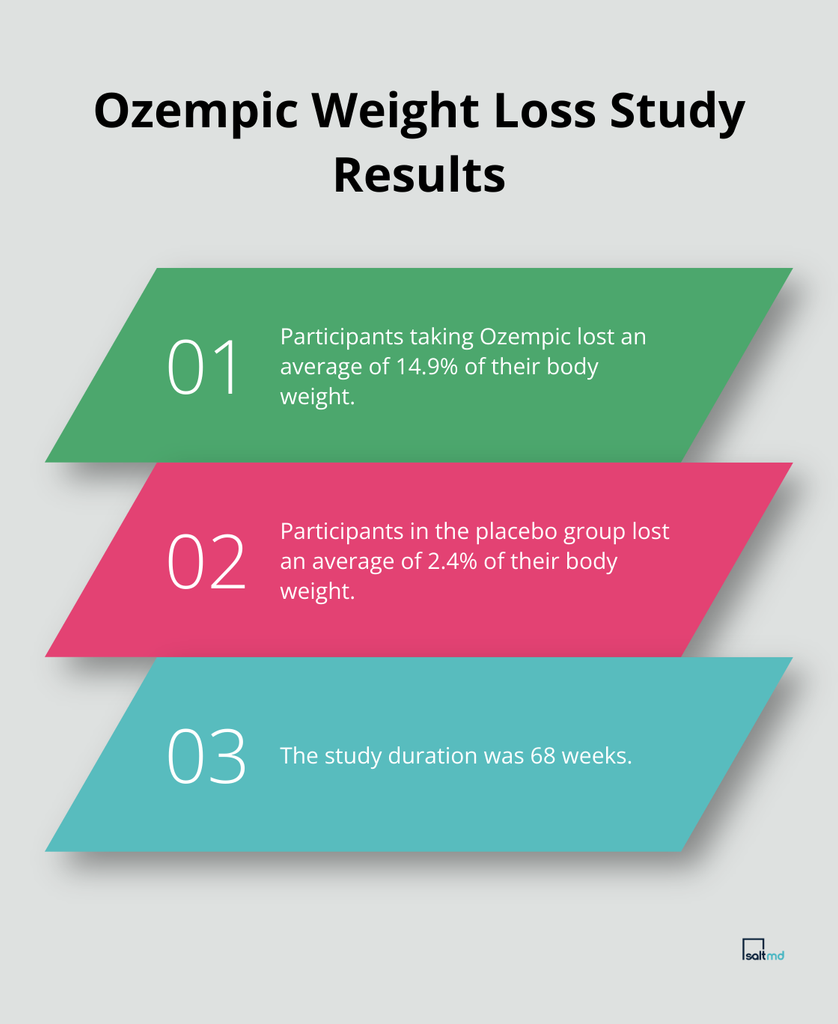
There is also a body composition argument. GLP-1 medications reduce fat, but some of the weight lost is lean tissue. In a body composition substudy of the STEP 1 trial, people on semaglutide lost about 19% of their fat mass and about 10% of their lean mass over 68 weeks. Testosterone therapy in men with low testosterone tends to increase lean mass, so using both could help protect muscle during weight loss.
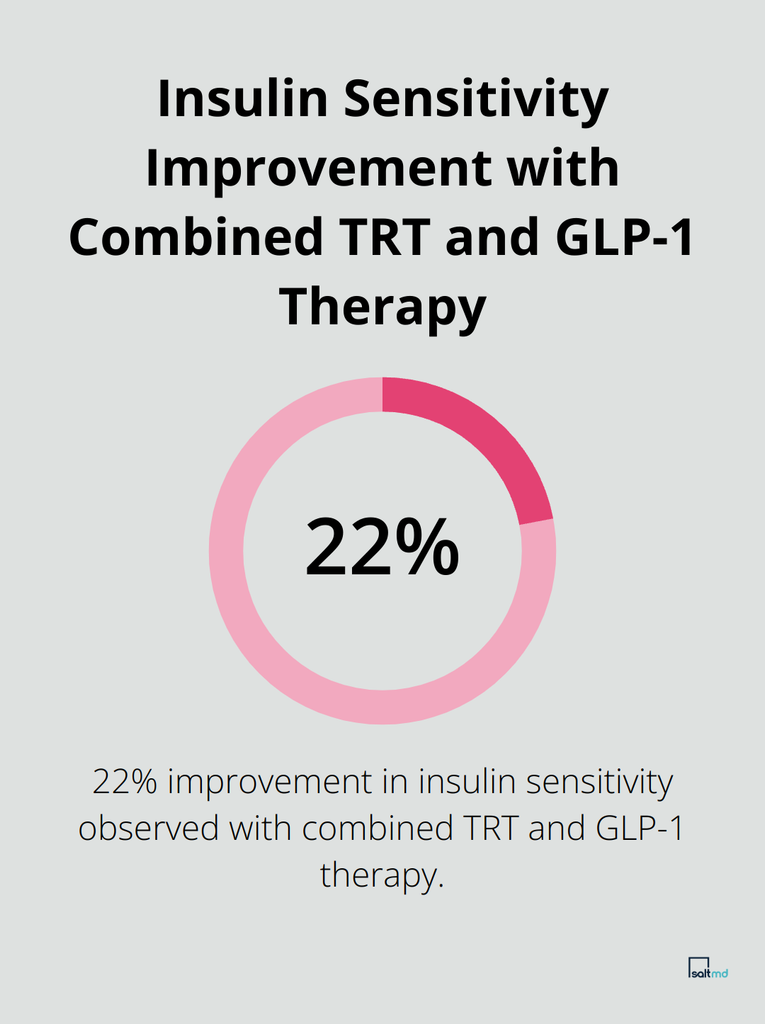
The evidence for combining the two is limited to small studies. In one retrospective study of men with obesity, diabetes and low testosterone who were already on testosterone and metformin, adding liraglutide improved weight, blood sugar control and erectile function. Large trials of TRT combined with semaglutide or tirzepatide have not been done.
What needs monitoring
Each treatment has its own side effects, and using both means watching for both.
- GLP-1 medications commonly cause nausea, constipation and diarrhea, mostly in the first weeks and after dose increases. They carry a boxed warning about thyroid C-cell tumors seen in animal studies and are not used in people with a personal or family history of medullary thyroid cancer or multiple endocrine neoplasia type 2.
- Testosterone therapy can raise hematocrit, the proportion of red blood cells in the blood, and is not started in men with untreated severe sleep apnea or who are planning to have children soon. For men 40 and older, prostate monitoring is discussed before starting.
- Shared labs usually include testosterone, hematocrit, blood sugar markers and lipids, repeated a few months after starting and then at regular intervals.
How SaltMD approaches it
- A 30-minute consultation about your symptoms, weight history and goals, including whether you plan to have children. In person in Atlanta or by video anywhere in the US.
- Lab work for testosterone, LH and FSH, metabolic markers and more, with blood drawn at a lab near you or at our office. If you have had blood work in the past 90 days, your clinician can review those results instead.
- A plan in the right order. Depending on your results, that may mean starting with weight loss, testosterone therapy, or both. Your prescription is filled by a partner pharmacy and shipped to you.
- Follow-up labs to track both treatments and adjust doses.
Learn more about our medical weight loss program and testosterone replacement therapy, or read Does Testosterone Therapy Cause Weight Gain?
Sources
- Corona G et al. Body weight loss reverts obesity-associated hypogonadotropic hypogonadism: a systematic review and meta-analysis. Eur J Endocrinol. 2013;168(6):829-843. doi:10.1530/EJE-12-0955
- Jensterle M et al. Effects of liraglutide on obesity-associated functional hypogonadism in men. Endocr Connect. 2019;8:195-202.
- Giagulli VA et al. Adding liraglutide to lifestyle changes, metformin and testosterone therapy boosts erectile function in diabetic obese men with overt hypogonadism. Andrology. 2015;3(6):1094-1103. doi:10.1111/andr.12099
- Wilding JPH et al. Once-weekly semaglutide in adults with overweight or obesity. N Engl J Med. 2021;384(11):989-1002. doi:10.1056/NEJMoa2032183
- Wilding JPH et al. Impact of semaglutide on body composition in adults with overweight or obesity: exploratory analysis of the STEP 1 study. J Endocr Soc. 2021;5(Suppl 1):A16-A17.
- Bhasin S et al. Testosterone therapy in men with hypogonadism: an Endocrine Society clinical practice guideline. J Clin Endocrinol Metab. 2018;103(5):1715-1744. doi:10.1210/jc.2018-00229