Can you take Finasteride while on TRT?
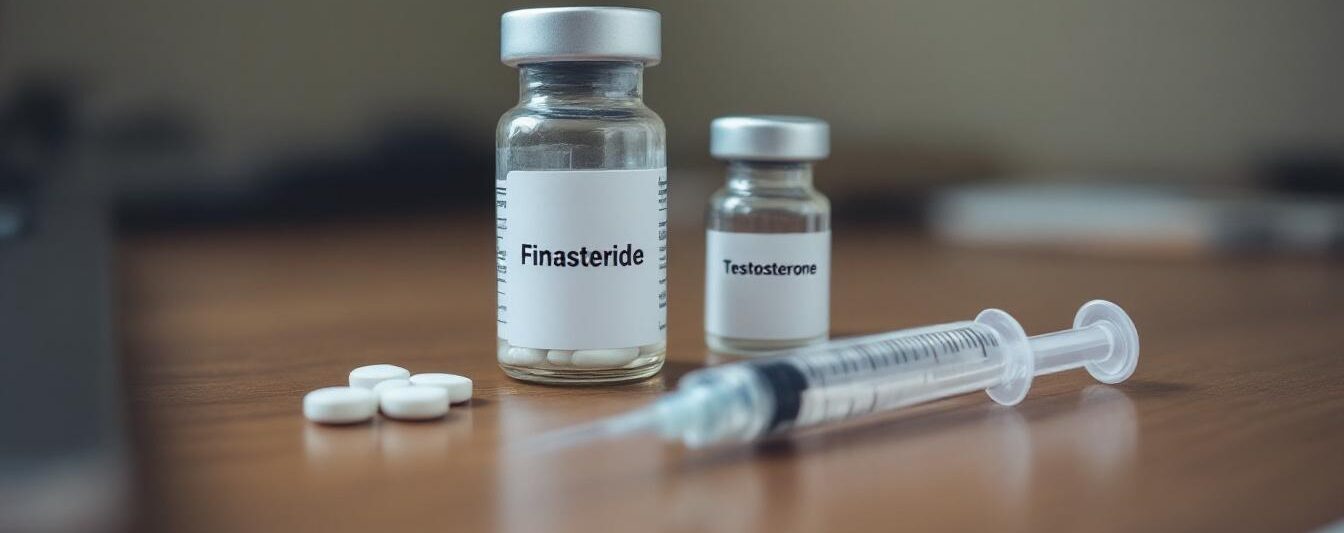
Men who start testosterone therapy often have a second worry alongside low energy or low libido: their hairline. Testosterone is turned into DHT in the body, DHT drives male pattern hair loss, and finasteride is the best-known medication that blocks that conversion. So the same questions about finasteride and TRT come up again and again. Will finasteride cancel out the benefits of testosterone? Is it safe to take both? And does it change anything about how treatment is monitored?
Two randomized trials have tested testosterone and finasteride together, and the finasteride label covers the rest. Here is what they show.
Why testosterone therapy can affect your hair
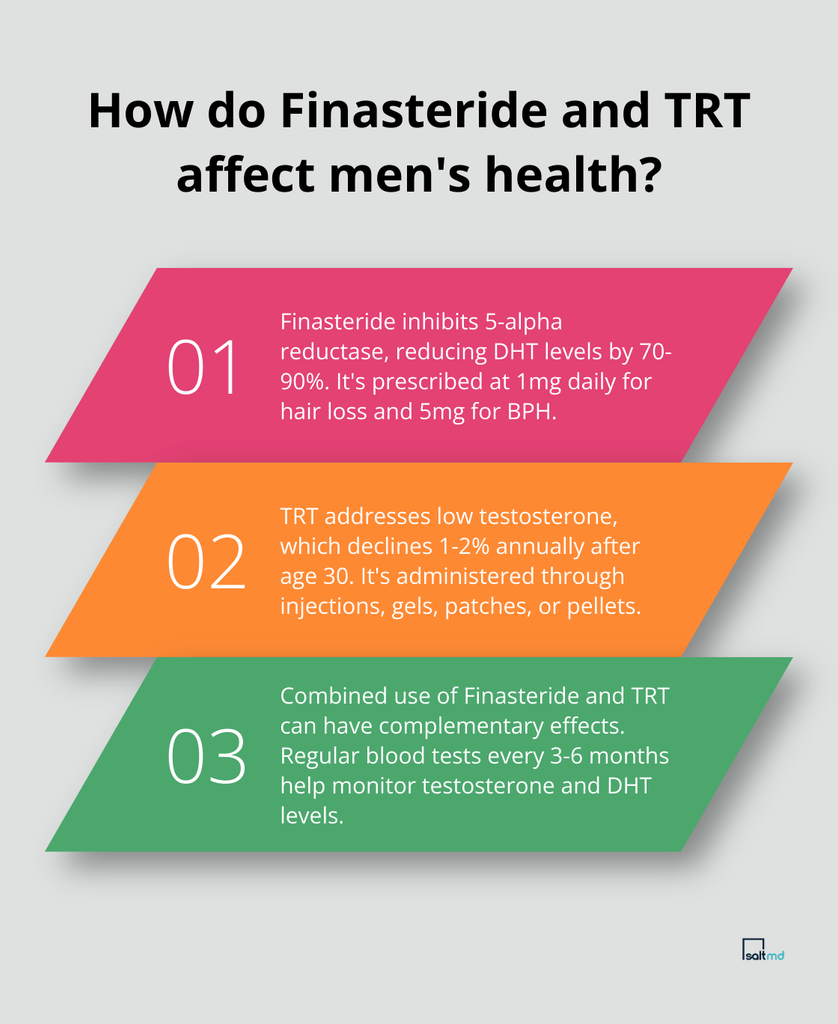
An enzyme called 5-alpha reductase converts part of the testosterone in your body into DHT, a more potent androgen. In men with a genetic tendency to male pattern hair loss, hair follicles on the scalp are sensitive to DHT, and over time they shrink. Raising testosterone also raises DHT, so testosterone therapy may speed up hair loss in men who were already likely to develop it. Men without that tendency are much less affected.
How much difference TRT makes in practice is not well established, because studies of men treated for low testosterone have rarely measured hair loss. Family history is still the best guide to your own risk.
What finasteride does
Finasteride blocks the type of 5-alpha reductase found in the scalp and prostate, which lowers DHT. In the US it is FDA-approved in two strengths: 1 mg as Propecia for male pattern hair loss, and 5 mg as Proscar for an enlarged prostate.
Topical finasteride is often discussed online, but there is no FDA-approved topical formulation. The versions sold by compounding pharmacies and telehealth platforms are compounded products, and in April 2025 the FDA warned about adverse events reported with them, including effects that continued after people stopped using the product.
Does finasteride cancel out the benefits of TRT?
The trials that tested this directly suggest it does not. In a study published in 2005, 70 men aged 65 and older with low testosterone received testosterone alone, testosterone with finasteride, or placebo for three years. Men in both testosterone groups gained a similar amount of lean mass, about 3.7 kilograms, and improved their strength and physical performance.
A 2014 trial in 60 men aged 60 and older with low testosterone came to the same conclusion over one year. Adding finasteride did not change the gains in muscle strength and bone density or the loss of body fat. It did prevent the growth in prostate size that testosterone alone caused. The authors concluded that high DHT is not needed for testosterone’s benefits on muscle, bone and fat, but is behind its effect on the prostate.
Both trials were in older men and used the 5 mg prostate strength of finasteride, not the 1 mg hair loss dose, and the 2014 trial used a higher testosterone dose than is usual in replacement therapy. They are still the best direct evidence available, and they point the same way.
Side effects and what changes in monitoring
In the clinical trials for Propecia, 3.8% of men taking finasteride reported a sexual side effect in the first year, such as lower libido, erectile dysfunction or reduced ejaculate, compared with 2.1% of men on placebo. In later years the difference between the groups was no longer significant. The label also describes reports of sexual side effects that continued after finasteride was stopped, and lists depression and suicidal thoughts among the effects reported since the drug came to market. These are uncommon, but they are worth knowing about before you start, and any change in mood should be reported to your clinician.
Finasteride also changes one of the main tests used to monitor men on testosterone. It lowers PSA, the blood marker used in prostate cancer screening. With the 5 mg dose, PSA falls by about half. Because PSA is checked before and during testosterone therapy, your clinician needs to know you take finasteride in order to read your results correctly. Any confirmed rise from your lowest PSA value while on finasteride should be looked into, even if the number is still in the normal range.
Finasteride must not be used in pregnancy, and women who are or may become pregnant should avoid contact with it.
Raising it at your consultation
If hair loss is a concern, mention it at your consultation, along with any family history and any hair loss medication you already take. Your clinician will take it into account when planning your testosterone treatment and reading your labs. SaltMD consultations last 30 minutes and are available in person in Atlanta or by video. Your hormone panel can be drawn at a lab near you or at our office, or your clinician can review blood work from the past 90 days.
Learn more about testosterone replacement therapy at SaltMD or read what the trials show about the benefits of TRT.