How to Access Testosterone Replacement Therapy Online

Online clinics have made testosterone therapy far easier to reach. You can see a clinician by video, have blood drawn near home and receive your prescription by mail. For many men that removes the main obstacles to getting evaluated at all.
The same convenience has a downside. Some services prescribe after a questionnaire or a single blood test, which falls short of the clinical standards. In July 2026 the Endocrine Society published a statement repeating that testosterone should not be started on symptoms alone.
This article explains how online TRT works, what the rules are, and how to tell a careful provider from a careless one.
Is it legal to get TRT online?
Yes, with conditions. Testosterone is a Schedule III controlled substance. Under federal law, controlled substances normally cannot be prescribed online without at least one in-person examination.
Since the pandemic, the DEA has temporarily allowed registered clinicians to prescribe controlled substances by telemedicine without that in-person visit. The current extension runs through December 31, 2026, and the DEA has been working on a permanent registration system for telemedicine prescribers. The rules may change, so a responsible provider should be able to tell you how they apply to you.
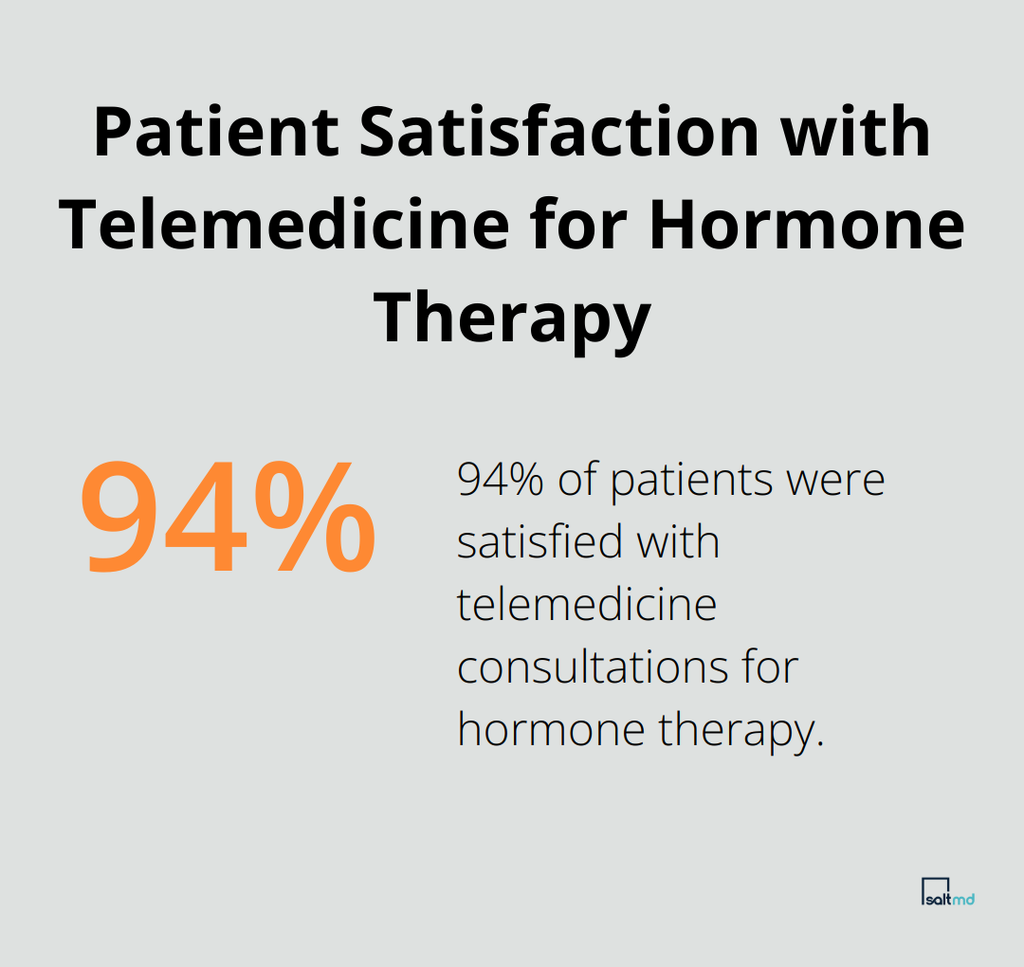
How online TRT should work
The process should follow the same clinical guidelines as an in-person clinic.
- A consultation about your symptoms, medical history, medications and whether you plan to have children.
- Blood tests. The guidelines call for two morning, fasting testosterone measurements on separate days, plus tests such as LH and FSH to find the cause, and baseline hematocrit. For men 40 and older, prostate cancer screening is discussed before starting.
- A diagnosis. Treatment is appropriate only when symptoms and consistently low test results go together, and none of the reasons not to treat apply.
- A treatment plan. The clinician explains which form of testosterone is prescribed, why, and where it comes from.
- Follow-up. A review 3 to 6 months after starting, with repeat labs for testosterone and hematocrit, then regular monitoring after that.
Monitoring is not a formality. In TRAVERSE, a large trial of testosterone therapy in men at higher cardiovascular risk, testosterone did not increase major cardiac events compared with placebo, but atrial fibrillation, pulmonary embolism and acute kidney injury were more common in the testosterone group. Those are the kinds of effects follow-up is meant to catch.
What a careful online provider does
- Confirms low testosterone wit morning blood tests, and never prescribes on symptoms alone.
- Asks whether you plan to have children. Testosterone therapy lowers sperm production, and this has to be discussed before you start.
- Checks hematocrit before treatment and again a few months in.
- Tells you which medication you are getting, whether it is an FDA-approved product or prepared by a compounding pharmacy, and which pharmacy fills it.
Online TRT at SaltMD
- A 30-minute video consultation, available [in the states where our clinicians are licensed].
- Lab work, with blood drawn at a lab near you or at our Atlanta office. If you have had blood work in the past 90 days, your clinician can review those results, and will order a repeat morning test if one is needed to confirm the diagnosis.
- A decision based on your results. If treatment is appropriate, your prescription is filled by a partner pharmacy and shipped to you.
- Follow-up labs for testosterone, hematocrit and other markers, with dose adjustments as needed.
Learn more about testosterone replacement therapy at SaltMD or read what the Endocrine Society guidelines say about TRT.
Sources
- Bhasin S et al. Testosterone therapy in men with hypogonadism: an Endocrine Society clinical practice guideline. J Clin Endocrinol Metab. 2018;103(5):1715-1744. doi:10.1210/jc.2018-00229
- Mulhall JP et al. Evaluation and management of testosterone deficiency: AUA guideline. J Urol. 2018;200(2):423-432. doi:10.1016/j.juro.2018.03.115
- Lincoff AM et al. Cardiovascular safety of testosterone-replacement therapy. N Engl J Med. 2023;389(2):107-117.
- Endocrine Society. Statement on testosterone replacement therapy. July 16, 2026.
- Drug Enforcement Administration and HHS. Fourth temporary extension of COVID-19 telemedicine flexibilities for prescription of controlled medications, effective January 1, 2026.