What Sermorelin Does and What the Research Shows
Growth hormone levels fall steadily from early adulthood. By middle age, most people release far less of it than they did at twenty, and that decline is often linked with more body fat, less muscle and lower energy. Not surprisingly, there is a lot of interest in ways to raise it.
Sermorelin is one of the most talked-about options. It is also one where online claims have run well ahead of the evidence. This article explains what sermorelin is, where it came from, what studies have actually found, and what a realistic expectation looks like.
What sermorelin is
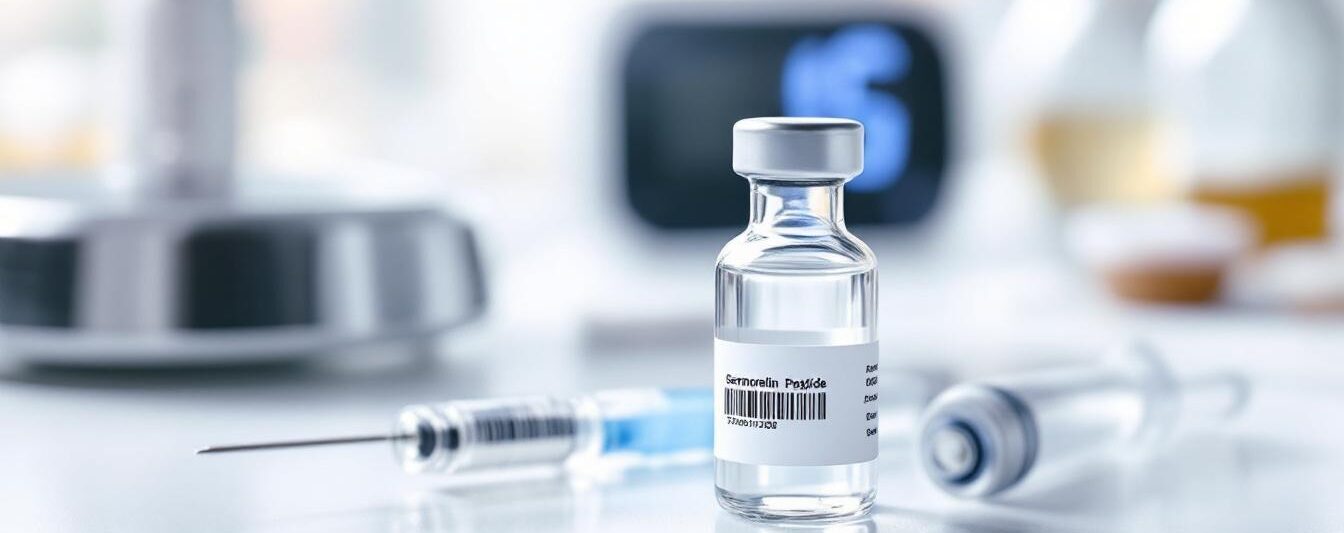
Sermorelin is a lab-made copy of the first 29 amino acids of growth hormone-releasing hormone (GHRH), the signal your brain sends to the pituitary gland to release growth hormone. Those 29 amino acids are the shortest part of the natural hormone that still works.
Because it acts one step before growth hormone, sermorelin does not replace growth hormone. It prompts your pituitary to release its own, in pulses, and the body’s usual brakes still apply. When levels of growth hormone and IGF-1 (the hormone the liver makes in response to growth hormone) rise, the body slows further release.
Its history and status today
Sermorelin was approved by the FDA in 1997, under the brand name Geref, to diagnose and treat growth hormone deficiency in children. The manufacturer stopped making it in 2008. In 2013 the FDA formally confirmed that the product was not withdrawn for reasons of safety or effectiveness.
Since then, there has been no FDA-approved sermorelin product in the US. Sermorelin prescribed today is prepared by compounding pharmacies, and compounded medications are not FDA-approved. Using it in adults for age-related decline is an off-label use.
Sermorelin vs growth hormone (HGH)
Growth hormone injections replace the hormone directly. Sermorelin asks the body to make more of its own. That difference has two consequences.
First, sermorelin only works if the pituitary can respond. In people whose pituitary is damaged, it will not help.
Second, because the body keeps control of how much growth hormone it releases, sermorelin is often described as gentler than HGH. That is a reasonable idea, but it has not been tested. No long-term trial in adults has compared the safety of the two.
What the studies show
Most of the research in adults dates from the 1990s, involved small groups of older volunteers, and lasted weeks to months.
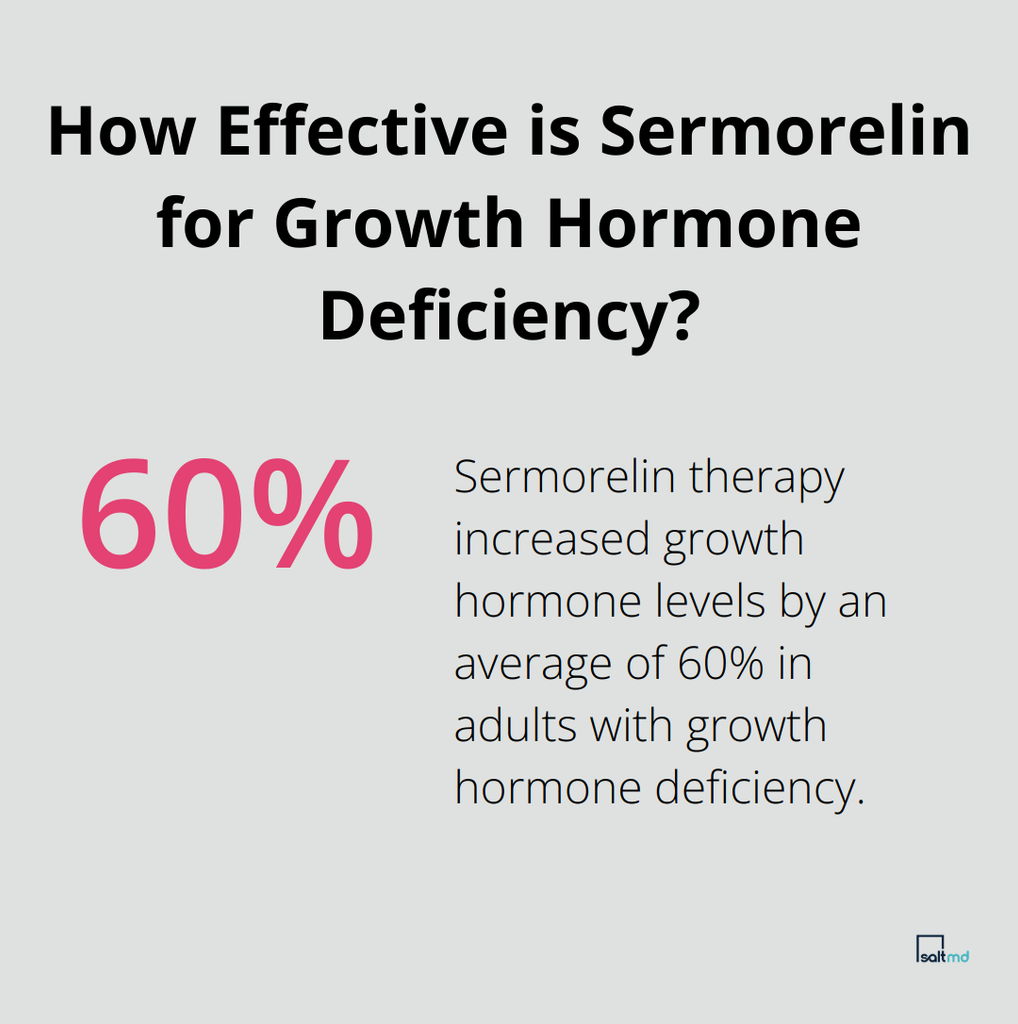
- Hormone levels. In healthy men in their late 60s, two weeks of GHRH injections raised growth hormone and IGF-1 to the levels seen in young men.
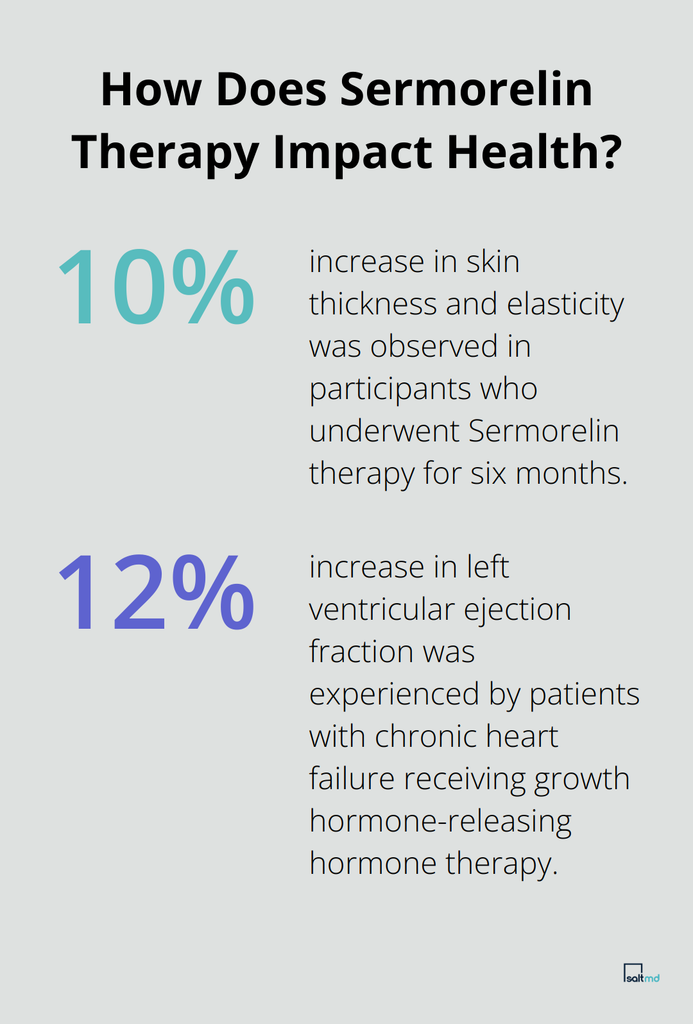
- Body composition. In a 16-week study in adults aged 55 to 71, nightly injections of a GHRH analog increased skin thickness in both men and women. Lean body mass, insulin sensitivity, general well-being and libido improved in men but not in women. Body weight did not change.
- Sleep, function and thinking. A review of GHRH treatment in older adults found increases in lean mass and decreases in fat, no consistent improvement in physical function, no improvement in sleep with the short-acting form, and better results on some cognitive tests. The authors concluded that the evidence did not yet support routine use in normal aging.
In short, small studies in older adults found that GHRH treatment raised growth hormone and IGF-1 and produced modest changes in body composition. Evidence for broader benefits, such as better sleep, energy or longevity, is limited.
What to expect
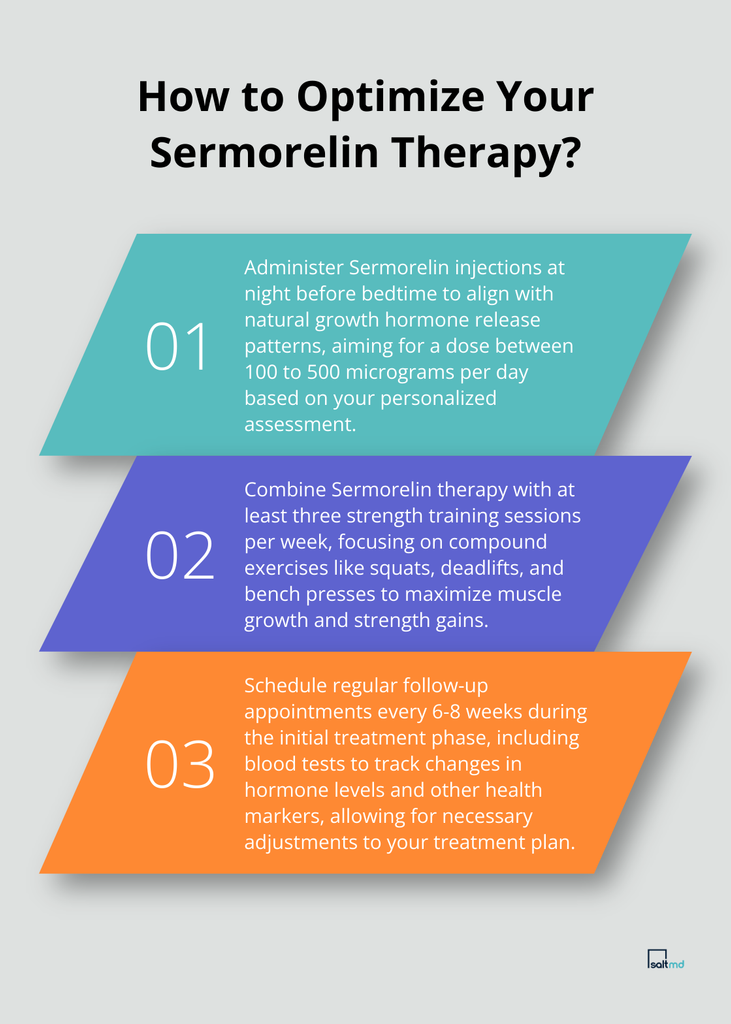
Changes are gradual and usually measured over months rather than weeks. Your clinician tracks IGF-1 in your blood work to see whether you are responding. Sermorelin works best alongside strength training, sleep and nutrition.
Side effects and who should not use it
The most commonly reported side effects are reactions where the injection is given (redness, swelling or pain), flushing and headache.
Sermorelin is not suitable for everyone. Your clinician reviews your history and labs before prescribing, including conditions where raising growth hormone is not advisable, such as active cancer or pregnancy.
How sermorelin is prescribed at SaltMD
- A 30-minute consultation, in person in Atlanta or by video anywhere in the US.
- Lab work, including IGF-1, with blood drawn at a lab near you or at our office. If you have had blood work in the past 90 days, your clinician can review those results instead.
- A decision. If sermorelin fits your results and goals, your clinician prescribes it. Your prescription is filled by a partner pharmacy and shipped to you.
- Follow-up labs to check IGF-1 and adjust your plan.
Learn more about sermorelin at SaltMD or our wider peptide therapy program.
Sources
- Corpas E et al. Growth hormone (GH)-releasing hormone-(1-29) twice daily reverses the decreased GH and insulin-like growth factor-I levels in old men. J Clin Endocrinol Metab. 1992. PMID: 1379256
- Khorram O, Laughlin GA, Yen SSC. Endocrine and metabolic effects of long-term administration of [Nle27]growth hormone-releasing hormone-(1-29)-NH2 in age-advanced men and women. J Clin Endocrinol Metab. 1997;82(5):1472-1479. PMID: 9141536
- Merriam GR, Schwartz RS, Vitiello MV. Growth hormone-releasing hormone and growth hormone secretagogues in normal aging. Endocrine. 2003;22(1):41-48. doi:10.1385/ENDO:22:1:41
- FDA. Determination that GEREF (sermorelin acetate) injection was not withdrawn from sale for reasons of safety or effectiveness. Federal Register, 2013 (FR Doc. 2013-04827).